
Wood and faux wood blinds look almost the same from across the room. Both have the classic slatted look, both tilt to control light and privacy, and both come in white, painted and stained finishes. The difference shows up over time, and in Florida, time means humidity, heat and a lot of sun.
This guide walks through how the two materials compare, which one we suggest for each room, and what to look at when you see samples in your own home.
What is the difference between wood and faux wood blinds?
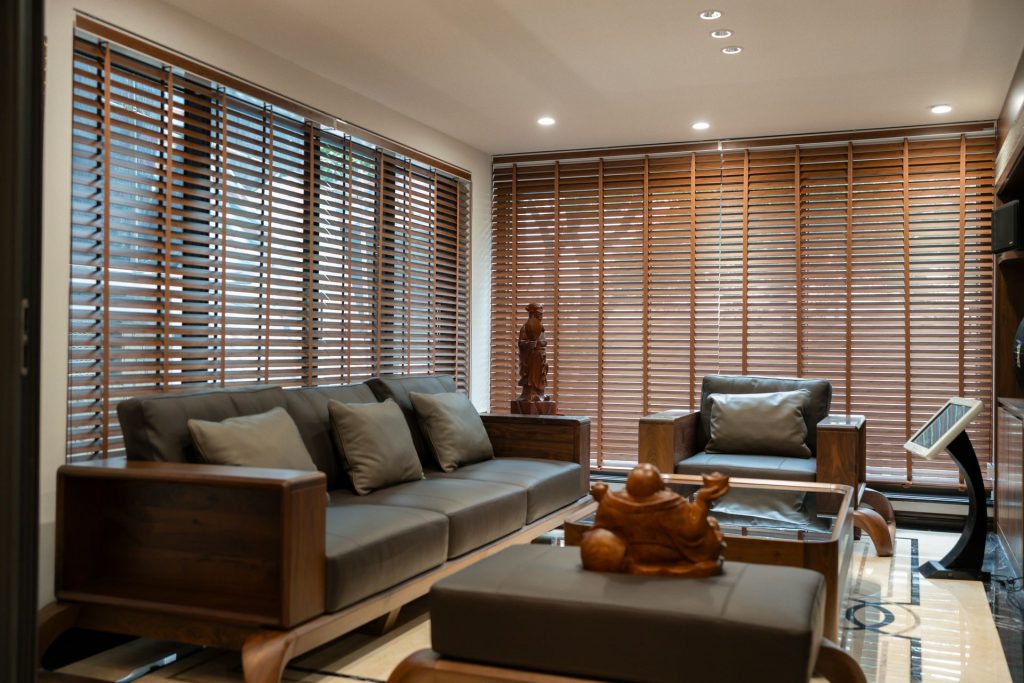
Real wood blinds are made from natural hardwood slats. They have real grain, take stain beautifully and feel warm in a room. Because wood is light for its size, a wood blind stays easy to raise even on a wide window.
Faux wood blinds are made from a composite or vinyl material finished to look like painted or stained wood. They are heavier than real wood, but they do not absorb moisture the way natural wood can, so they hold their shape in damp rooms.
Both are part of our custom blinds collection, along with vertical blinds for wider openings, so you can choose room by room instead of putting one material in the whole house.
How does Florida humidity affect wood blinds?
Natural wood takes on moisture from the air and gives it back as the air dries. In a living room with steady air conditioning, that movement is small and a well finished wood blind performs well for years.
Rooms with regular steam or splashing are a different story. Over time, moisture can cause wood slats to bow, warp or lose their finish. That is why we usually steer homeowners toward faux wood in:
- Bathrooms, especially near a shower or tub
- Kitchens, near the sink or range
- Laundry rooms
- Rooms that open to a pool area or lanai and see a lot of humid air
Faux wood handles these spaces well. It does not absorb water, and a quick wipe takes care of most spots.
Which is better for large or wide windows?
Weight matters on a big window. Because real wood is lighter than faux wood, a single wood blind can usually cover a wider opening and still lift smoothly.
Faux wood is heavier, so on very wide windows it may be better split into two or three blinds side by side, each easier to raise. That is not a drawback so much as a planning choice, and it is one of the things we measure for at your consultation.
If the opening is a sliding glass door or a very wide picture window, you may want to look at other options too. Vertical blinds and shades often work better on openings that wide.
Do faux wood blinds look cheap?
Not the way they used to. Today's faux wood comes in crisp whites, soft neutrals and wood tone finishes, and many have a textured grain that reads as real wood from a few feet away. In a white or painted finish, most guests will not be able to tell the difference.
Where real wood still stands apart is in rich stained finishes. If you want the depth of a true walnut or cherry tone, real wood is hard to beat. Seeing both side by side in your own light is the easiest way to decide, which is why we bring samples to your home.
Wood or faux wood, room by room
Room
Our usual pick
Why
Living room
Real wood
Lighter on wide windows, warm stained finishes
Bedroom
Either
Both tilt closed for privacy; choose by finish and budget
Home office
Real wood
Rich look, easy to tilt for screen glare
Kitchen
Faux wood
Handles steam and splashes, wipes clean
Bathroom
Faux wood
Will not absorb moisture from showers
Laundry room
Faux wood
Stands up to humidity and heat
Kids' rooms
Faux wood
Durable and easy to clean
How do wood and faux wood handle Florida sun?
Strong, direct sun is hard on any material over many years. Both wood and faux wood blinds hold up well in normal use, and both let you tilt the slats to bounce harsh light up toward the ceiling while keeping the view.
A few simple choices help either material last longer in a sunny room:
- Lighter colors reflect more heat and tend to show sun exposure less than very dark finishes.
- Tilting the slats during the hottest part of the day cuts heat and glare at the same time.
- For west facing windows that bake every afternoon, it is worth comparing blinds with other options before you decide.
How do you clean and care for each one?
Faux wood is the easier of the two. Dust the slats regularly, and wipe them with a damp cloth and mild soap when needed.
Real wood needs a lighter touch. Dust often with a soft cloth or duster, and avoid soaking the slats. A barely damp cloth for spots is fine, as long as you dry the slat right after.
When do shutters or shades make more sense?
Blinds are not the only answer for a Florida window. If you want a more permanent, built in look, custom shutters are worth comparing, since they become part of the window frame and come in their own range of materials. If you want a softer look or more complete light control, our custom shades include roman and roller styles in many fabrics.
Many homes mix all three: shutters in the front rooms, faux wood blinds in the kitchen and baths, and shades in the bedrooms. There is no rule that every window has to match.
How do you decide at your consultation?
The easiest way to choose is to see both materials in your own light. At your complimentary in-home consultation, we bring samples to you, look at each room, measure every window and talk through how you use each space. Then we put together a plan room by room, so the material fits the room instead of the other way around.
Frequently asked questions
Can faux wood blinds go in a bathroom?
Yes. Faux wood is one of the best blind choices for bathrooms because it does not absorb moisture from showers and baths, and it wipes clean.
Are real wood blinds heavier than faux wood?
No, it is the other way around. Real wood is lighter than faux wood, which is why wood blinds are often the better choice for wide windows.
Can I use wood blinds in some rooms and faux wood in others?
Yes, and many homeowners do. Choosing whites or finishes that coordinate keeps the house looking consistent from room to room.
How do I get started?
Book a complimentary in-home consultation. We bring samples to your home, measure every window and help you choose the right material for each room.
Ready to compare them in your own windows? Contact us to schedule your free in-home consultation anywhere in Central Florida.